
For buyers and sellers
What buyers and sellers should know about the crawlspace in Jacksonville and Eastern North Carolina.
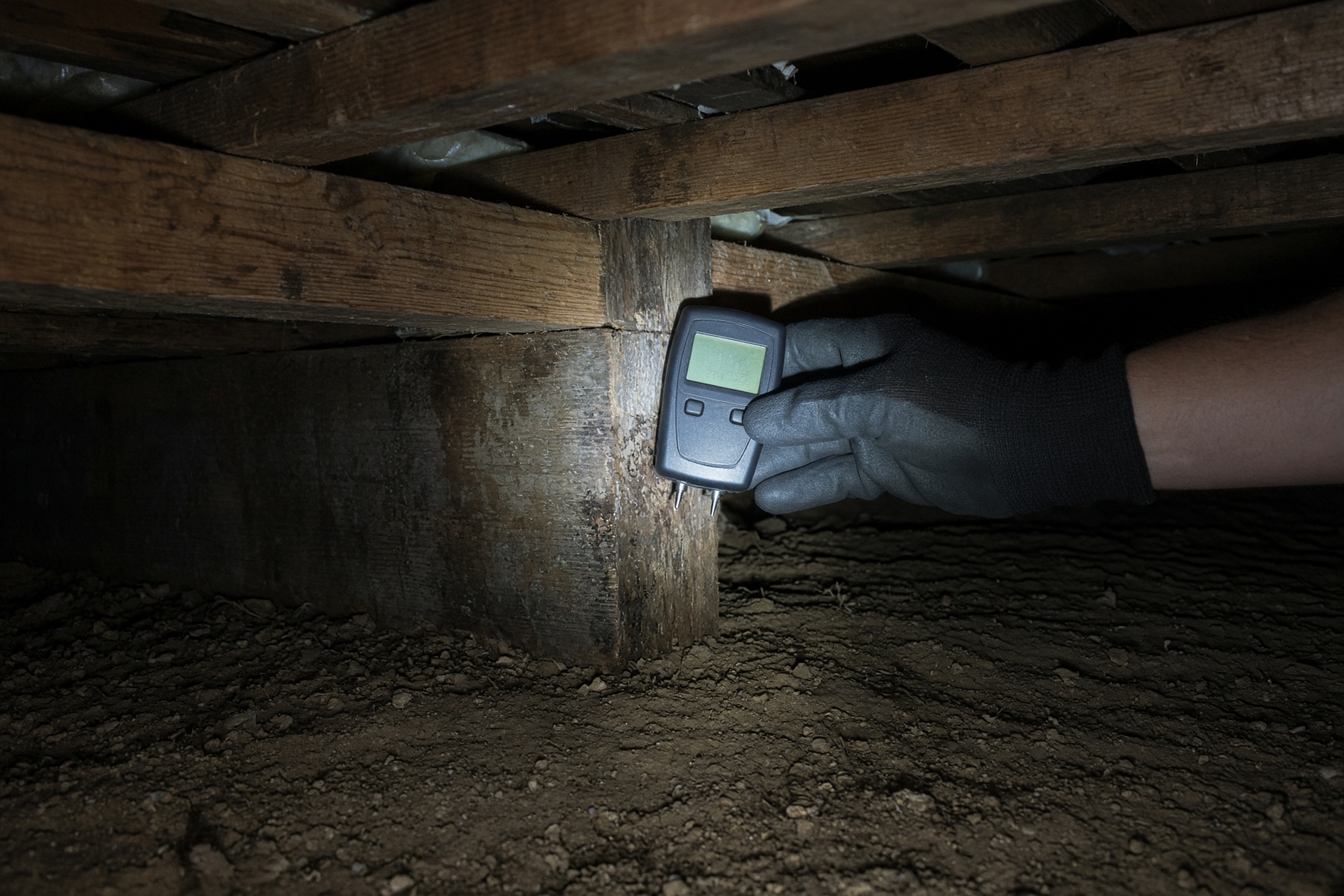
In Jacksonville and Eastern North Carolina, the expensive surprise is often under the house. The crawlspace inspection covers the floor structure, the moisture, and the mechanicals that run through that space.
What gets looked at under the house
Debris should be cleared, and hedges trimmed, so the crawlspace can be entered safely.
The wood that holds the floor
Joists, beams, girders, and piers are checked where they are visible. Rot, crushed wood, and sistered repairs are photographed. In a pier-and-crawl house, this is the structure you are buying.
Water
Standing water, mud, and a water line on the piers mean the ground under the house stays wet. Coastal rain and a high water table make that common in Onslow and Carteret counties. Wet wood does not stay sound.
The vapor barrier
The plastic on the ground is there to keep soil moisture out of the house. A barrier that is torn, missing, or short of the walls is a moisture problem. It is not a housekeeping note.
Insulation, ducts, and leaks from above
Fallen insulation, a duct that is disconnected or sweating, and a plumbing leak from a bath or a kitchen above the crawl are written down with photos. A damp smell usually has one of those causes.
Visible electrical and water lines
Electrical wiring and water lines that run through the crawlspace are checked where they are visible. Wiring that is loose, spliced outside a box, or lying on the soil is photographed. So are supply lines that leak or hang without support.
Moisture is the finding that stalls a sale
Standing water, rotten joists, or a vapor barrier that no longer covers the ground are repairs you can price before you close. The report shows them in photos.
Plumbing leaks from the rooms above are covered on the plumbing page. The crawlspace is part of the buyer checklist, along with the roof.
No-obligation pricing
See under the house before you buy it.
Takes less than a minute.